Our site uses cookies in order for you to have the best experience! You are able to change your cookies preferences at any time by choosing the "Cookies Policy" link at the bottom of every page.
Cookies Policy On this page we provide details on what cookies, web beacons and similar technologies are, what information we collect through them and how we use them to improve your experience. This page was designed to help you understand more about these technologies and their use by us as well as reviewing your prior consent or not in connection with the opt-in, opt-in -out).
What are cookies? Like most sites, staff-jeans.com uses cookies, web beacons, and similar technologies. These are small data files that are placed on your computer, mobile, tablet, or other devices, and allow us to collect specific pieces of information when you visit or interact with our site or our services. The names and types of cookies, web beacons, and similar technologies we use to collect information (such as on the pages you visit, click links, or other actions you make on our services or on our ads and on our emails ) may sometimes change. To help you better understand this policy and use of such technology from us, we provide you with the following definitions:
Cookies: These are small text files (usually composed of letters and numbers) that are placed in your browser or device memory when you visit a site or see a message. There are several types of cookies such as: Session cookies: These are necessary for the smooth operation of the site and expire when you close your browser. They allow us to link your actions when you go from link to link within our site. Persistent cookies: Stored on your device for a certain amount of time. First-party cookies: They are placed by the site you are visiting. Third-party cookies: They are placed through the site you visit on behalf of another site.
You can generally manage or disable cookies using tools available to all major browsers. For each browser you use, you'll need to set up your cookie options for everyone. Each browser may have different tools available to handle it.
Web beacons: These are small graphic pictures (also known as "pixel tags" or "clear GIFS") that may be included in our site or in some emails or generally in our services and which work in conjunction with cookies to identify the user or some behavior.
Similar technologies: They are technologies that store information in your browser or device such as Flash cookies, HTML 5 cookies and others provided by the various web application programming methods. These technologies can work independently for all Browsers you use and may need to be set up directly through your installed applications or your device. We do not use such technologies to store data.
We use the term cookies or similar technologies in our policies to refer to all the technologies we use to store data in your browser or device or to collect data that helps us recognize you as described above.
Service Providers In addition to our first party cookies, we are still working with Service Providers who are companies that help us in various aspects of our business such as services, applications, or advertising tools. With regard to ads, we use certified service providers to help provide you with relevant advertisements for our products at various points of the internet. These service providers may also place cookies on your device (third party cookies). They can also collect information to help them identify your device such as your IP address or other unique features.
What options do you have? We provide various services on our site that are only available with the use of these technologies. You can always block, turn off or turn off these technologies in your browser if it allows. However, in this case, you will not be able to take advantage of some features of our site. You may also need to enter if you are a registered user, your username and your password more often. For more information, please see your browser or device settings. For any personal information collected and stored by our site through these technologies, we have first obtained the explicit consent of the user and after having informed the user in detail as far as possible about its use by us as well as giving the user ability to disable these technologies through the window that appears at the bottom of all pages when it first enters the site or at any time at the bottom of this page.
The use we make about these technologies belongs to the following general categories:
Operational Cookies (required). We use cookies that are necessary for the operation of our site. These include technologies that allow you to access pages on our site which must necessarily identify which user you are like a basket page, order page or similar features as well as features such as saving the language in which you chose to view our site , storing the currency that by default is the euro for use in the case of credit card payment, saving your choice whether or not to have cookies on your browser or device and cookies or similar technologies that provide security against abusive use of the site or attempted fraud. These cookies are not disabled if you choose not to use cookies when you enter the site or at the bottom of this page. However, they may be disabled by your browser or device settings, but disabling them may cause the site to malfunction.
Analytics cookies (Performance-Related). We use first party and third party cookies, web beacons, and other technologies to store statistics about the user's behavior on our site or services (such as where our site found, which pages we visited, what newsletter we opened, etc.) in order to improve our services to the visitor either by correcting functional problems on our pages or by making our pages better in terms of their use by offering a better user experience or by updating our commercial strategy RH based on your preferences in order to provide you the products you want possible.
Advertising and remarketing cookies. We use third party cookies (such as facebook and google cookies) to provide you with the content you saw on our site with advertisements, offers and opportunities for our products in the above and other platforms and their affiliates.
We offer you the ability to activate or disable all cookies used on this site other than the cookies when you first enter our site. At any time at the end of this page, you can change the activation setting or not of the cookies you previously selected. If you choose to disable cookies while you previously opted to enable them, third party cookies will stop recording information about you, however you may still see our ads that are not so relevant to you because of we can only deactivate further recording from the moment you selected it to be deactivated. To manage or disable third party cookies permanently, see below.
Use of cookies by authorized third parties We work with third parties known as "Service Providers" who are authorized by us to place third party cookies, web beacons and other technologies on our site. These providers help us to improve our services either through the statistics we collect or through the targeted by the interests of our site's ad users. These providers are subject to confidential agreements with us as well as other legal obligations to collect or use personal data on their part.
Since you have accepted the use of cookies, third party cookies and similar technologies were probably placed by the following service providers Facebook: In order to provide you with advertisements through Facebook's advertising and marketing platforms (such as Audience Network, Website Custom Audiences) and other Facebook plugin or marketing tools. Google: For statistical purposes through the google analytics platform, as well as advertising and marketing reasons through its tools (such as DoubleClick for Publishers, Google DoubleClick AdX Service, Adwords). Skroutz.gr: Our company uses the Skroutz Analytics service, which operates with cookies, in order to continually evaluate and improve the quality of services it provides to the consumer. Through this service, if you have previously given your consent through Skroutz.gr, anonymous usage statistics are securely disclosed to us by Skroutz. The data obtained from our company through this service is covered by Skroutz.gr's privacy policy and cookies policy, where you may also withdraw your consent. Pushcrew notifications: For marketing and marketing purposes. Tawk to chat platform: For statistical purposes and to help the chat user on which page the user they are chatting with and similar auxiliary uses. The above providers may use personal data collected through their cookies on our site in accordance with their own privacy terms Facebook Data Policy: https://www.facebook.com/privacy/explanation Google Privacy Policy: https://www.google.com/intl/en/policies/privacy/). Terms of use Scrooge: https://www.skroutz.gr/privacy Pushcrew notifications: https://pushcrew.com/privacy-policy/gdpr-security-compliance/ Tawk's Privacy Policy: https://www.tawk.to/privacy-policy/
Keep in mind that cookies are placed on the browser. If you sign in to our site from different devices and choose to use cookies in some of them, then you may still choose not to use cookies, see our ads on the platforms of some of our partners above on any of your devices.
Except for authorized service providers, we do not allow any third party to place cookies or similar technologies on our site for the purpose of detecting or collecting personal data.
You can accept or disable the placement of cookies from our site by clicking on the following button: Your consent or does not take 365 days from the moment you click the button. If at the end of the 365 you visit our site, you will be consulted again or not.
Universidad de Chile at 100: The owl, the blue and the red "U"
24 May
Posted Bynikos0 Comment(s)2 View(s)
Universidad de Chile, "La U" to its fans, officially celebrates its birthday on 24 May 1927. On 24 May 2027 it turns 100, a full century. Its roots, however, go back even further, to a school pitch in Santiago.
From the Internado to "Universitario"
It all begins at the Internado Nacional, a state boarding school in Santiago. That is where Internado FC was born, and in 1911 it became the football section of Club Atlético Internado. In 1912 it joined the capital's football association.
On 24 May 1927, at the team's general meeting, the members decided to rename it "Universitario". This is the date officially recognised today by Azul Azul, the company that runs the club. Sources disagree, though: some describe a simple renaming of the same team, others a merger with Club Universitario de Deportes.
In 1934 the university officially took over the team, which became Club Deportivo de la Universidad de Chile. Until 1980 it was the institution's sporting arm, with students in its ranks.
A little owl on the chest
The club's symbol is the chuncho, a small South American owl. It came from Club Náutico Universitario, a student nautical club that joined the new team. The owl was chosen because it stands for wisdom and the harmony of body and mind.
The chuncho was first worn on the chest on 15 July 1928, in a match against Unión Condell. The crest was officially adopted in 1943 and gave the club the nickname "Chuncho". On the shirt, however, a letter usually takes centre stage: the "U".
From white to blue
In the early years the team played in a white shirt and black shorts. In the early 1930s it switched to blue, with a white "U" on the chest, although some sources say 1933 and others 1934. A few years later the "U" turned red, and today the red "U" with a white outline is the club's trademark.
On 3 November 1957 the team wore an all-blue kit for the first time. Experiments followed, such as the red sleeves of 2001-02, before the classic blue returned in 2006. Since 2009 a gold star on the sleeve has counted every league title.
The "Blue Ballet"
The golden era came between 1959 and 1969. The team played such beautiful football that the press called it the "Ballet Azul", the Blue Ballet, borrowing the name from Colombia's Millonarios. In those years it won league titles in 1959, 1962, 1964, 1965, 1967 and 1969.
At the 1962 World Cup, held in Chile, the national team finished third with many "U" players in the line-up. Among them were Leonel Sánchez, who holds the club's league appearance record, and Carlos Campos, its all-time top scorer.
Fall, comeback and the night of 2011
After the split from the university in 1980, hard years followed, and in 1988 came relegation. The team bounced straight back, winning the second-division title in 1989. In the 1990s a young Marcelo Salas led "La U" to back-to-back league titles in 1994 and 1995.
The finest moment came on 14 December 2011. Under coach Jorge Sampaoli, the team beat LDU Quito 3-0 and lifted the Copa Sudamericana unbeaten, its first international trophy. The star was Eduardo Vargas, the tournament's top scorer.
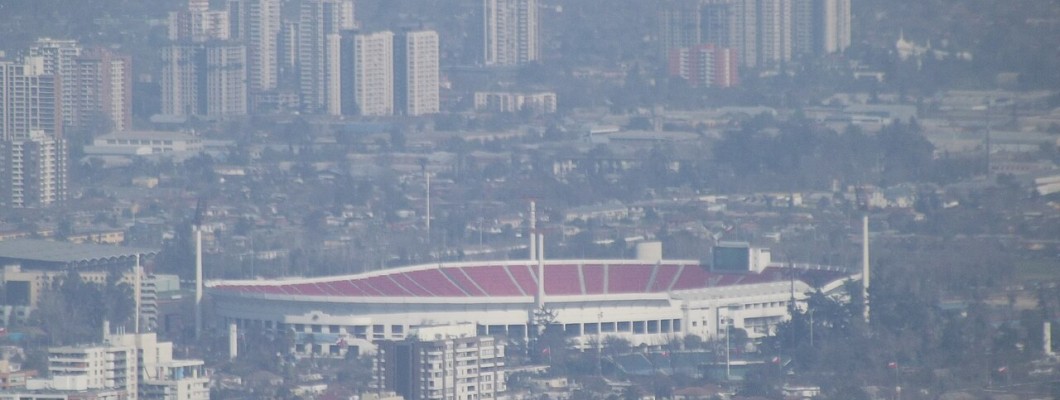
"La U" has no ground of its own and plays at the Estadio Nacional in Ñuñoa. Its big derby is the Superclásico against Colo-Colo, while against Universidad Católica it plays the "university derby".
Celebrate with us
From a Santiago boarding school to the top of South America, "La U" has worn its blue with pride for a century. Happy 100th birthday to the Chuncho!