
The 1990s changed Europe's biggest club competition for good. In 1992 the old European Cup took the name Champions League, and soon afterwards sponsors made it onto the shirts worn in finals. Ten finals from Vienna to Barcelona, one of them in Athens, and some of the best-loved kits of all time.
1990 · Vienna: Milan – Benfica 1-0
On 23 May 1990, at the Praterstadion, Milan successfully defended their title. The only goal came from Frank Rijkaard in the 68th minute, when he ran through the Benfica defence.
The Rossoneri wore their "lucky" white kit, with an image of the trophy where the scudetto would normally sit. They were the last team to retain the title until Real Madrid did it again in 2017.
1991 · Bari: Red Star Belgrade – Marseille 0-0 (5-3 pens)
On 29 May 1991, at the Stadio San Nicola, two clubs met in a final for the first time in their history. Red Star coach Ljupko Petrović chose to play cautiously and bet on penalties, and the 0-0 held for 120 minutes.
In the shoot-out Marseille's Manuel Amoros missed, while Prosinečki, Binić, Belodedici, Mihajlović and Pančev all scored. The Yugoslavs were used to it, since drawn league games at home were then settled on penalties. Soon afterwards the country broke apart in war, and this great team went with it.
1992 · London: Barcelona – Sampdoria 1-0 (aet)
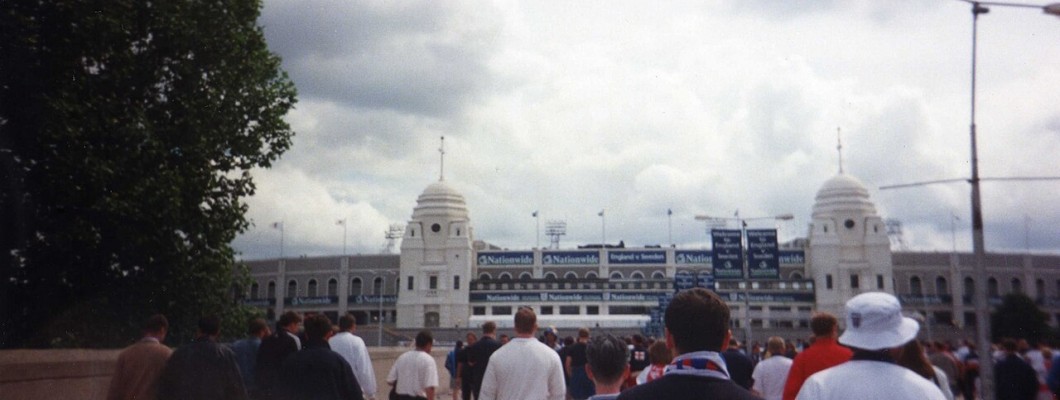
On 20 May 1992 Wembley hosted the last final under the old name. In the 112th minute of extra time Ronald Koeman struck a free kick and gave Johan Cruyff's Barcelona their first title, after the missed chances in the finals of 1961 and 1986.
The shirt became a legend: Barça played in their orange kit, worn that night for the third and last time. Many see that goal as the foundation of the "Dream Team" and everything that followed.
1993 · Munich: Marseille – Milan 1-0
On 26 May 1993, at the Olympiastadion, the first final under the new name was played. Basile Boli, a defender born in Ivory Coast, headed in on 43 minutes and Marseille became the first French club to lift the trophy. It was also Marco van Basten's last match.
Marseille wore a white adidas shirt with oversized stripes on the right shoulder and no sponsor, as UEFA did not yet allow commercial logos. The joy soon faded: a match-fixing scandal involving a league game against Valenciennes led to relegation, but the European title was not taken away.
1994 · Athens: Milan – Barcelona 4-0
On 18 May 1994 the final came to the Olympic Stadium (OAKA), in front of 70,000 spectators. Barcelona were the favourites, while Fabio Capello was without the suspended Baresi and Costacurta and the injured Van Basten and Lentini.
Even so, Daniele Massaro scored on 22 minutes and again just before half-time, Dejan Savićević made it 3-0 with a superb lob on 47 minutes and Marcel Desailly added the fourth on 58. Milan wore all white again, against Barça's blaugrana.
Desailly became the first player to win the trophy in consecutive years with different clubs. The 4-0 remained the biggest winning margin in a Champions League-era final until PSG beat Inter 5-0 in 2025.
1995 · Vienna: Ajax – Milan 1-0
On 24 May 1995, at the Ernst-Happel-Stadion, Patrick Kluivert scored on 85 minutes and gave Ajax their first European title in 22 years. At 18 years and 327 days he became the youngest scorer in a Champions League final.
It was the first final in which shirt sponsorship was allowed. And, for once, Milan, playing their third final in a row, lost while wearing white.
1996 · Rome: Juventus – Ajax 1-1 (4-2 pens)
On 22 May 1996, at the Stadio Olimpico, Ravanelli opened the scoring on 12 minutes and Litmanen equalised on 41. In the shoot-out Peruzzi saved from Davids and Silooy, and Jugović, who had come on for Conte, sent the cup to Turin.
There was a Greek touch too: in the semi-final Panathinaikos had beaten Ajax 1-0 in Amsterdam before going down 3-0 in Athens. In features on final shirts, Juve's striped Kappa top with two stars on the chest stands out.
1997 · Munich: Borussia Dortmund – Juventus 3-1
On 28 May 1997, again at the Olympiastadion, Karl-Heinz Riedle scored twice in five minutes (29', 34') and Del Piero pulled one back with a back-heel on 65. On 71 minutes 20-year-old local boy Lars Ricken came off the bench and, 16 seconds later, with his first touch, lobbed Peruzzi from more than 20 metres.
Dortmund wore a yellow and black Nike shirt, and according to the Football Kit Archive it was the following season's shirt, making its debut in the final.
1998 · Amsterdam: Real Madrid – Juventus 1-0
On 20 May 1998, at the Amsterdam Arena, Predrag Mijatović scored on 66 minutes. Real Madrid won their seventh title, their first in 32 years, while Juventus, in their third final in a row, suffered a second straight defeat.
1999 · Barcelona: Manchester United – Bayern Munich 2-1
On 26 May 1999, at the Camp Nou, in front of 90,245 spectators, Mario Basler put Bayern ahead on 6 minutes and the Bavarians hit the woodwork twice. In stoppage time Teddy Sheringham (90+1') and Ole Gunnar Solskjær (90+3') produced one of the most incredible comebacks ever, completing the first league, cup and Champions League treble by an English club.
United won the toss over colours and wore red shirts, white shorts and white socks, while Bayern played in silver with maroon trim. Without the suspended Keane and Scholes, Peter Schmeichel captained the side in his last game for the club, and that day would have been Matt Busby's 90th birthday.
The decade's legacy
An Italian club played in eight of the ten finals, with Milan there five times and Juventus three. Yet the most unforgettable nights belonged to others: Koeman at Wembley, Kluivert in Vienna and those three minutes at the Camp Nou.
This was also the decade that turned the final shirt into a collector's item. Barça's orange, Milan's white, Marseille's sponsor-free white and United's red are still among the most sought-after retro shirts today.
See our Champions League club jerseys at sportarena.gr.
Photo: The old Wembley Stadium with its Twin Towers, 1999 – Responsible? (χρήστης του Wikimedia Commons), Wikimedia Commons, public domain.